Book report templates seem to be the most popular on my blog, so I am re-publishing an old post. Simply right-click on an image, and either save to a file or print directly from this blog site. You do have to print each page separately.
I have previously posted a simple 1-page book report. It can be used by beginners or more advanced students to force brevity and work on summarizing skills. Here it is:
I have also developed a fuller book report for the more advanced reader. Remember when answering the questions to use proper sentences, and the good paragraph structure with opening sentence, supporting sentences, and closing statements. This structure can be used for book reports at any grade level. I have given an example using JK Rowling's "Harry Potter and the Prisoner of Azkaban".
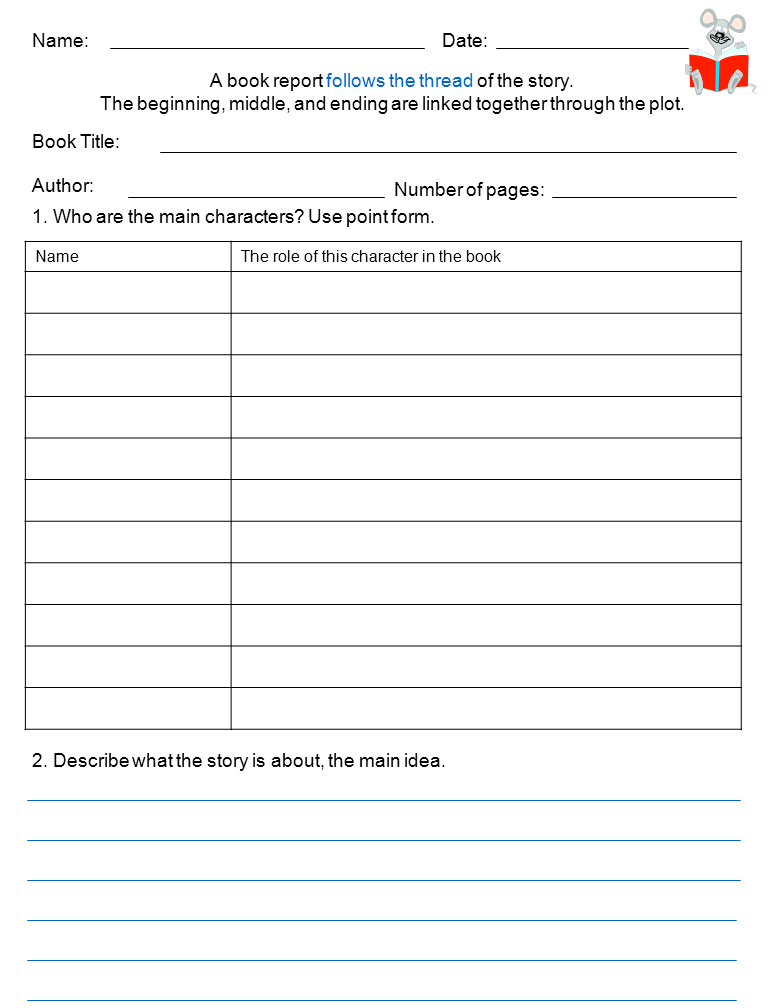
Enjoy your reading!
Lisa
Tips and tutor coaching help for kids and teenagers with Aspergers Syndrome.
Showing posts with label book report. Show all posts
January 2, 2012
September 26, 2010
Book Report template - fiction
Here's the book report format we use after each fiction book. It is fairly simple, but really helps Shane to focus on the big questions. As he starts each new book, he is reminded that he will have to write a book report after he finishes, so he should be thinking about the 5 questions on the form as he is reading.
Tips:
Read-on!
Tips:
- Let your child choose his own book - this gives him control and helps keep his interest.
- Show your child the questions before he starts the book: the scariest thing for an AS child is a blank page!
- Remind him often of the questions to be answered.
- Try to read the book together and discuss each sentence/paragraph/chapter as you go. Most often, AS kids will focus on the details but not quite grasp the big picture. Ask "why do you think this happened?" often.
- Do one thing at a time. I don't insist on perfect handwriting or exact grammar with a book report - the primary goal is to understand the concepts of the book and the main ideas.
- Guide him to information he can get from the cover. Does the title describe what is going on in the book? What can he assume about the story from the picture on the cover?
- If this is too hard, then break it down. Last year, we read together and discussed each paragraph, sometimes looking up words or talking about expressions. Then at the end of each chapter, I typed up 4 to 5 questions and Shane answered those. Each chapter was like a mini review - what happened, why it happened, his opinion, and a prediction of what might come next. This really forces more abstract thinking.
- Be patient. This is not easy for most AS kids, but the rewards are well worth the effort. Shane's improved language skills have already helped him in other courses: math, science, history...
Subscribe to:
Posts (Atom)